
Saros Cycle in Ancient Astrology
By Edward Hemlock Leave a comment
The concept of the saros cycle has deep roots in ancient astrology, even if the word “saros” wasn’t actually used in those times. The saros cycle is a repeating eclipse pattern lasting 223 lunar months (about 18 years, 11 days, and 8 hours).
Ancient astrologers noticed that eclipses happened in regular cycles and built entire traditions of prediction and omen-reading around these patterns. Below are some historical examples of how the 223-month eclipse cycle (what we now call the saros) was observed, recorded, and used for forecasting. These examples show that, long before the term itself came into use, the saros cycle was already a core tool for astrologers, shaping charts, omens, and predictions for kingdoms and rulers.
Historical Examples of the Saros Cycle in Ancient Astrology
-
Enuma Anu Enlil (the old Babylonian collection of celestial omen tablets): The Enuma Anu Enlil is one of the oldest astrological texts from Mesopotamia. It includes thousands of omens about the sky (such as lunar and solar eclipses, planetary appearances, weather, and animal births) and their supposed influence on kings and kingdoms.
In Enuma Anu Enlil, you see lists of lunar and solar eclipses, with detailed records of what happened in those years and what it meant for kings, wars, and the weather. The idea that eclipses occur in repeating cycles and that “events will return as before” when the same pattern recurs, shows the use of the saros concept, even though they didn’t use that name.
-
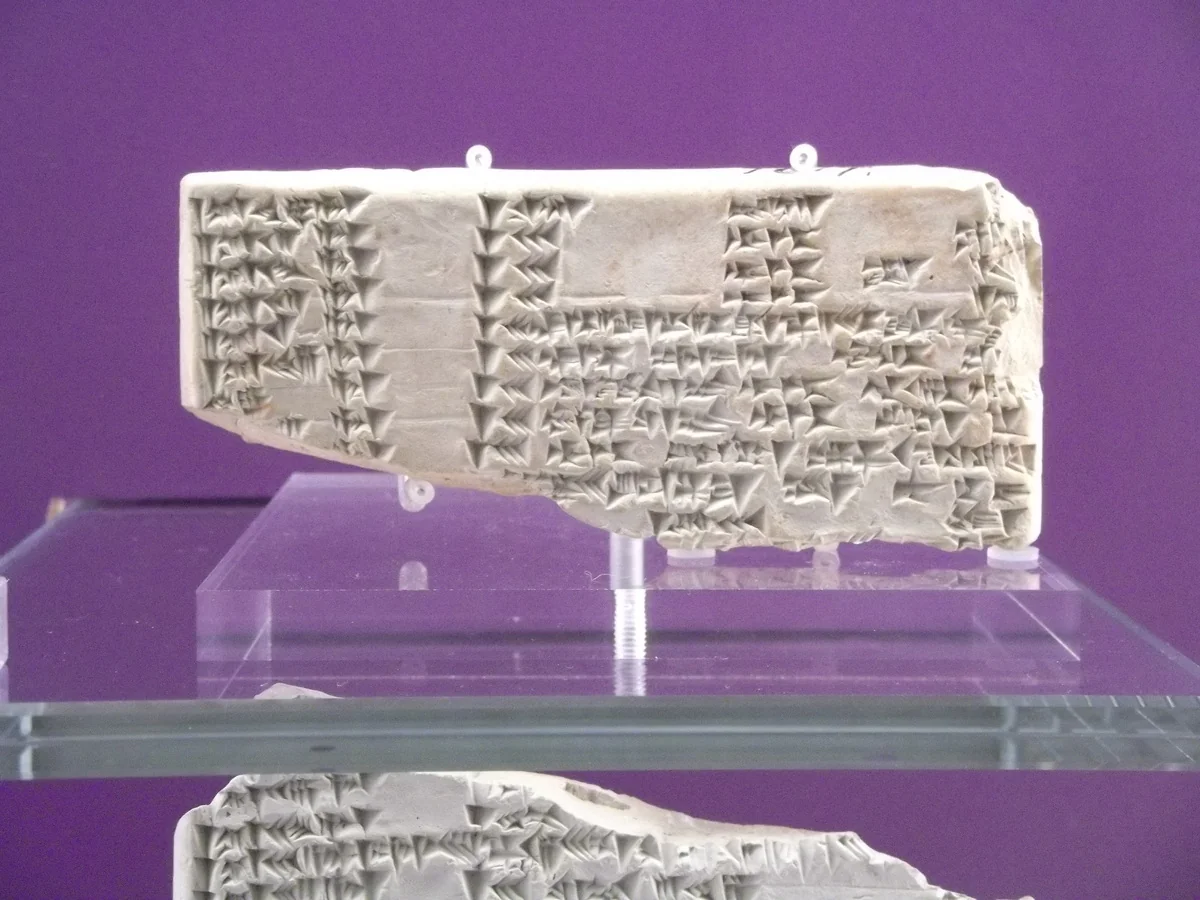
Babylonian Eclipse Tablets (8th-1st centuries BCE) (part of the Enuma Anu Enlil): The Babylonians were the first to use the saros concept in astrology, recording and tracking lists of eclipse observations on clay tablets (like the so-called “Babylonian Eclipse Tablets” from the 8th-1st centuries BCE). They noticed that lunar and solar eclipses return in nearly the same order every 223 lunar months, which is about 18 years. They used this pattern to predict eclipse dates and to connect them to royal fates or omens for the kingdom. The texts don’t use the word “saros,” but the 223-month eclipse cycle was central to their astrological forecasting.
-
Babylonian Astronomical Diaries (7th-1st centuries BCE): These daily journals were kept by Babylonian sky-watchers who were both astronomers and working astrologers. These diaries tracked planetary, lunar, and eclipse events, alongside records of weather, food prices, and political events. The diaries show that Babylonian astrologer-astronomers not only recorded eclipse cycles but also explicitly linked repeating eclipse patterns with major events (plagues, wars, etc.).
By tracking when eclipses repeated and what events followed, Babylonian astrologers developed an early understanding of cycles like the saros, and used the regular return of eclipses to make predictions about the fate of kings, public health, and the land.
These records are the practical backbone behind the saros concept in astrology. They clearly connect astronomical observations (including eclipses) and predictions about worldly events, showing practical use of cycles. These diaries show the real-world connection between eclipse observation and astrological forecasts in ancient Mesopotamia.
-
Hipparchus of Nicaea (2nd century BCE): Hipparchus is credited as the first Greek astronomer to confirm and apply the 223-month cycle for eclipse prediction, from Babylonian methods. In scholarly sources, he notes how “periods of many months” repeat eclipse types and uses this for the calculation of lunar and solar eclipses. While not writing as an astrologer, his transfer of Babylonian eclipse cycles into Greek science influenced astrological timing and prediction in the Hellenistic period.
Who Was Hipparchus of Nicaea: He’s known from his surviving works (mostly through Ptolemy’s Almagest Book IV and later summaries) to have studied Babylonian eclipse cycles and to have referenced their periodicity. He used the idea of eclipse cycles, though he didn’t use the word “saros.” His work influenced both astronomers and astrologers.
-
Pliny the Elder (1st century CE): Pliny the Elder in Natural History mentions that the Chaldeans could “predict future eclipses and their influence upon the fate of empires” by knowing these lunar cycles. He marvels that “such prodigies repeat after specific periods of years,” showing that the idea of this repeating cycle was already established as a tool for forecasting at the time.
-
Ptolemy of Alexandria (2nd century CE): Ptolemy in his Almagest explains how eclipses happen in regular periods, and refers to the 223 lunar months as the cycle known to the “Chaldeans” (Babylonians). He spells out that ancient astrologers relied on this pattern to predict not just eclipses, but the return of fateful omens because, “The Chaldeans, by observation of ancient records, discovered that eclipses recur at intervals of 223 months, and thus are able to predict great and fearful events.”
His companion text to Almagest is Tetrabiblos, which is more directly about astrology, and also references eclipse cycles as important for timing astrological events, showing how the saros concept was integrated into astrological practice by this time.
-
Theon of Alexandria (4th century CE): In late antiquity, Theon of Alexandria, in his Commentary on the Almagest (4th century CE), explained how ancient Chaldean astronomers and astrologers used long-term records of eclipses to identify regular cycles and make predictions. He described how the Chaldeans would look for patterns in past eclipses to foresee future ones, noting that eclipses “return at intervals of many years as seen in the ancient records.” Even though Theon’s main focus was on astronomical methods, his work shows that by late antiquity, astrologers and mathematicians alike valued these recurring eclipse periods as foundations for prediction, both astronomically and in support of astrological traditions.
-
Arabic Astrologers and Astronomers (Medieval Era): Scholars like Al-Biruni (973-1048 CE), who had access to both Greek and earlier Babylonian sources, referenced eclipse periods of 223 months and attributed their application in astrology to the “ancients.” In his Al-Qanun al-Mas’udi, he describes how astrologers relied on ancient observations and cycles for eclipse predictions and their use in making annual horoscopes for rulers.
Even though his books (Al-Qanun al-Mas’udi and Chronology of Ancient Nations) are more about astronomy than direct astrology, they show the continuity from earlier astrology traditions of observing the cycle that we now call saros.